
A snack factory that packs potato chips, fried peanuts, or puffed snacks into pouches usually asks how much electricity the packaging step adds to each bag. The snack food packaging machine for a continuous production line runs a vertical film roll system, a bucket conveyor, and a multihead weigher together, and its energy use follows throughput and sealing heat. This article explains the energy drivers and the checks that keep the food packaging step efficient.
Which Components Consume Energy in a Snack Food Packaging Machine?
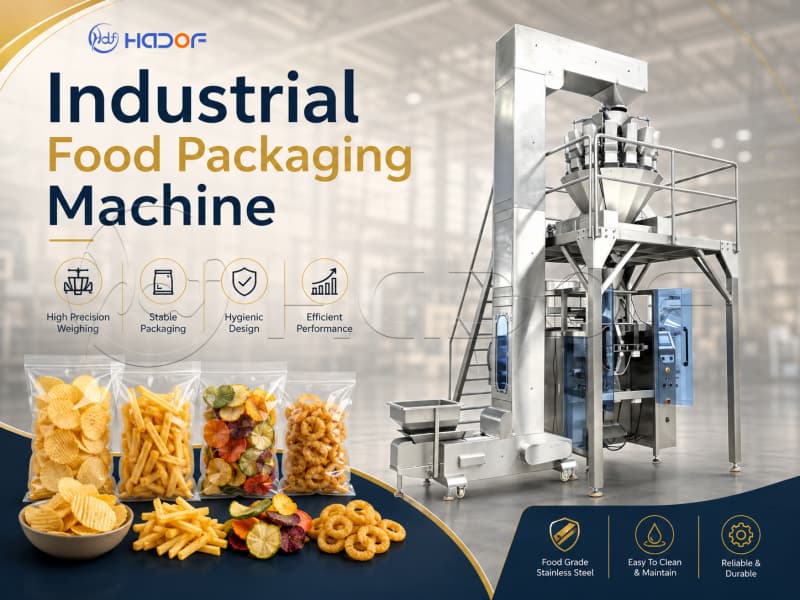
The packaging step draws power from the film sealing heaters, the conveyor and weigher motors, and the control system, and each part runs differently during a cycle. The industrial food packaging machine with a multihead weigher uses the weigher to divide product into stable portions and the vertical packing machine to form and seal each pouch. The sealing jaw stays hot during the run, so its heat is the main continuous load. A buyer who separates these loads understands where the food equipment energy actually goes.
How Does the Vertical Film Roll System Use Energy Efficiently?
A vertical film roll machine makes a pouch, fills it, and seals it in one pass, so the product does not wait between stages. The vertical film roll packing machine for fried snacks forms bags continuously and supports optional bag shapes, which removes the start-stop rhythm of a manual sealer. The Z shape bucket conveyor lifts product to the weigher, and the multihead weigher drops an accurate portion before sealing. This continuous flow spreads the heating and motor load across many bags, so the food manufacturing energy per bag stays lower than a stop-and-go line.
How Does Throughput Affect Energy Per Bag?
Energy per bag falls when the machine keeps a steady rate, because the sealing heater and the motors keep running whether the line packs slowly or fast. A machine that packs 25 to 50 bags per minute reaches a lower energy cost per bag than a slower manual station, and a full shift keeps that rate steady. A snack factory that plans its output around the machine’s rated speed avoids the food production waste of running a hot sealer at half load. Throughput therefore becomes an operating cost lever as much as a capacity number.
How Does the Packaging Machine Connect With Frying and Freezing Equipment?
A packaging machine works best when the fried, seasoned, and cooled product arrives at a steady rate, because gaps force the sealer to idle and waste heat. The machine connects with a continuous fryer for a snack packaging line, a seasoning machine, and a cooling or freezing stage, and each handoff keeps the product moving. A balanced line keeps the food processing system running at its planned pace and lowers the energy spent on warm-up and waiting.
How Should a Plant Measure Operating Cost Before Purchase?
Food packaging operating cost includes electricity, film, and labor, so a buyer records the machine’s power and throughput before the order. You can review the food packaging equipment manufacturer before a purchase, because service and spare parts decide how long the sealer stays productive. A careful plant measures energy per bag and not only the purchase quotation. This check protects the food cost of a packaging line across many shifts.
Conclusion
A snack food packaging machine uses most of its energy in the sealing heater and the drive motors, and a steady 25 to 50 bags per minute keeps the energy per bag low. A balanced line and a measured operating cost therefore protect the food production budget. If you have interests, you can learn more about https://www.friedfoodsolutions.com/industrial-food-packaging-machine/